How to Become the Most Trusted, Most Chosen Business in Your Local Market: Seven Plays That Actually Work
You're not losing customers to a better business. You're losing them to a more visible one.
That's the uncomfortable truth most local business owners never hear. The plumber down the road with the worse reviews and the higher prices keeps winning jobs. The accountancy firm that's been around for thirty years keeps losing clients to a newer practice that posts on LinkedIn twice a week. The physio who's genuinely brilliant can't fill her books while a mediocre competitor three streets away has a six-week wait.
The difference isn't quality. It's trust at scale. And trust, in a local market, is something you can build deliberately.
Chet Holmes, the sales strategist and author of The Ultimate Sales Machine, made a point that should permanently change how you think about marketing. At any given moment, only around 3% of your potential customers are actively ready to buy. Another 7% are open to it. The remaining 90% are somewhere between "not thinking about it" and "definitely not now." Most businesses spend all their energy chasing the 3%. The businesses that dominate their local markets spend their energy educating and staying visible to the other 97%, so that when those people are ready, there's only one name in their head.
That's the game. Here are seven ways to win it.
---
1. Show Up Consistently With Helpful Content - Before Anyone Asks
The wrong belief: "I don't need to post content. My work speaks for itself."
It doesn't. Not to the person who hasn't met you yet.
Education-based marketing is the practice of giving away genuinely useful information to your market, not as a trick, but as a demonstration of competence. A solicitor who explains what to look for in a commercial lease. A builder who posts a short video on how to spot a dodgy quote. A financial planner who writes a plain-English guide to pension drawdown. None of these are pitches. All of them build trust with people who are months or years away from being ready to buy.
The mechanism is simple: people do business with people they know, like, and trust. Content creates the "know" and "like" before you've ever spoken.
Ask yourself: What's the one question every new client asks me in the first meeting? Answer it publicly, in writing or on video, this week. That's your first piece of content.
One practical note: the biggest barrier here isn't ideas, it's time. A short voice memo recorded on your phone during a commute can be turned into a polished LinkedIn post, a short article, or a newsletter section in minutes with the right AI tool. You don't need to be a writer. You need to be willing to share what you know.
---
2. Collect and Showcase Real Reviews - Systematically, Not Occasionally
According to BrightLocal's 2024 Local Consumer Review Survey, Google is by far the most-used review platform, relied on by around 81% of the consumers who read reviews. And 72% say positive reviews increase their trust in a business.
Most owners know this. Most still don't have a system for collecting reviews. They rely on the occasional happy client who happens to feel motivated enough to leave one unprompted. That's not a strategy. That's hope.
The fix is a trigger, not a campaign. Decide the moment in your customer journey when satisfaction is highest - the day a project completes, the moment a result is delivered, the follow-up call after a service - and make asking for a review part of that moment. A short, direct message: "We'd really appreciate a Google review if you have two minutes. Here's the link." That's it.
Then respond to every review you receive. Every one. BrightLocal's data is clear: 88% of consumers say they would use a business that responds to both positive and negative reviews, compared to just 47% who'd consider a business that ignores them entirely. Responding to a negative review with professionalism and care is, counterintuitively, one of the most powerful trust signals you can send to every future customer reading it.
If you're time-poor, an AI assistant can draft review responses for you in seconds, keeping the tone warm and specific without you having to stare at a screen wondering what to say about a three-star complaint.
---
3. Respond Faster Than Every Competitor
You're not losing customers to a better business. You're losing them to a more visible one.
This one is brutal in its simplicity. Research from MIT and InsideSales.com found that companies responding to an inbound enquiry within five minutes are 21 times more likely to qualify that lead than those who wait 30 minutes. And per a widely cited industry study, 78% of customers buy from the first business to respond.
Think about your own behaviour. You search for a tradesperson, send three enquiries, and book the first one who calls back. The other two might have been better. You'll never know.
For most small businesses, the gap isn't five minutes versus thirty minutes. It's five minutes versus two days. The owner is on a job. The admin is at lunch. The enquiry form submission sits in an inbox nobody checks until tomorrow.
The first step this week: audit your own response time. Send a test enquiry through your website right now. Time how long it takes to get a reply. If the answer is "hours" or "I'm not sure," you have found your single highest-leverage fix.
Automating an immediate acknowledgement - "Thanks for getting in touch, we'll call you within the hour" - costs almost nothing to set up and immediately separates you from 80% of your competitors. An AI operating partner can handle this triage layer entirely, so no enquiry goes cold while you're on a job.
---
4. Build a Referral Engine - Don't Just Hope for Word of Mouth
Per research cited by WinSavvy, 82% of small businesses say referrals are their primary source of new customers. And referred customers are 50% more likely to make a second purchase than those acquired through other channels.
Most owners know referrals matter. Almost none have a system for generating them. They rely on organic goodwill, which is real but unpredictable.
A referral engine has three components. First, you identify your best referrers - not just happy clients, but the connectors, the professionals, the people whose recommendation carries weight in your market. Second, you make it easy: a short message, a simple link, a clear ask. Third, you acknowledge every referral, whether it converts or not. A handwritten note, a small gift, a genuine thank-you call. People refer again when they feel seen.
The first step this week: write down the names of five people who have sent you business in the last two years. When did you last thank them? When did you last remind them you're still here and still excellent? Send one of them a message today. Not a pitch. Just a genuine check-in.
---
5. Own Your Google Business Profile - Most Competitors Leave It Half-Finished
Here's something that should make you sit up: most local businesses have now claimed a Google Business Profile, but around four in ten leave the listing incomplete. A half-finished profile is an open goal for any competitor who bothers to finish theirs.
The data on what a complete profile does is unambiguous. Businesses with fully completed Google Business Profiles receive, on average, 7 times more clicks than those with incomplete ones. Given that 46% of all search queries carry local intent (per Google data reported by Search Engine Roundtable), this is not a marginal advantage. It's the difference between being found and being invisible.
A complete profile means: accurate name, address, phone number, and hours. A clear business description with the words your customers actually use when they search. Photos - real ones, not stock images. Your services listed with descriptions. Regular posts, at least monthly. And Q&A answered before anyone asks.
BrightLocal also reports that 80% of consumers lose trust in a local business when they find incorrect or inconsistent information online. If your hours are wrong, your address is outdated, or your phone number goes to voicemail with a generic message, you are actively losing customers you never knew you had.
The first step this week: log into your Google Business Profile, go to the "Info" section, and check every single field. Fix anything that's out of date. Add photos if there are none. This takes under an hour and the return is immediate.
---
6. Teach Your Market - Don't Pitch It
This is the hardest shift for most owners to make, because it feels counterintuitive. Why would you give away your expertise for free?
The businesses that dominate local markets are not the ones with the biggest advertising budgets. They're the ones who have become the default answer to a question their market keeps asking.
Because the alternative - pitching at people who aren't ready - is expensive, exhausting, and largely ineffective. Remember the 3% who are ready to buy right now. You can fight over them with every other business in your market, competing on price and availability. Or you can spend your energy becoming the trusted authority for the other 97%, so that when they move into the buying window, the decision is already made.
Teaching takes many forms. A monthly email with one genuinely useful tip. A short video answering a common question. A free checklist or guide that helps your ideal customer make a better decision - even if they don't use you. A talk at a local business group. A post that explains what to look for when hiring someone in your industry.
Ask yourself: What do my best clients know that my worst prospects don't? That gap is your curriculum.
The businesses that dominate local markets are not the ones with the biggest advertising budgets. They're the ones who have become the default answer to a question their market keeps asking. You become that answer by answering it, publicly, over and over, before anyone asks you to.
---
7. Follow Up Relentlessly - and Humanly
The research on this is almost embarrassing in how clear it is. According to data compiled by LeadResponse, 80% of sales require five or more follow-up contacts after the first interaction. Yet 44% of salespeople give up after just one attempt.
In a local services business, this plays out constantly. A prospect asks for a quote, you send it, they go quiet. You assume they've gone elsewhere. They haven't. They're busy, distracted, or waiting for a reason to say yes. The competitor who sends a friendly follow-up three days later, and again a week after that, wins the job. Not because they were better. Because they were present.
The key word in the heading is "humanly." Relentless follow-up that feels like a drip campaign is worse than no follow-up. What works is a short, personal message that shows you remember the conversation. "Just checking in on the quote I sent last week - happy to talk through any questions." That's it. No pressure. No urgency theatre. Just presence.
This is where an AI operating partner earns its keep most clearly. It can track every open quote, every unanswered enquiry, every client who hasn't been in touch for six months, and prompt you - or send a first draft - so nothing falls through the cracks. Not because you're automating relationships, but because you're making sure the human relationship actually happens.
---
The Compounding Effect
None of these seven plays is a silver bullet. The owner who does one of them inconsistently will see modest results. The owner who does all seven, consistently, over twelve months, becomes genuinely difficult to compete with.
Trust compounds. A business with 200 Google reviews, a reputation for fast responses, a newsletter that 400 local people actually read, and a referral network that sends two or three jobs a month doesn't need to advertise. It has built something that advertising cannot buy: the default answer in its market.
The businesses that dominate their local areas are not the oldest, the biggest, or the cheapest. They're the most present, the most helpful, and the most trusted. That's a game any owner can play.
---
Start Here: Your Prioritised First Week
If you're reading this with a full diary and a sceptical mind, here's the honest answer to "where do I start?"
Do these five things this week, in this order. First, log into your Google Business Profile and fix every incomplete field - this is the highest-leverage thirty minutes you'll spend this month. Second, send a review request to your three most recent happy clients today, with a direct link to your Google listing. Third, time your own lead response by sending a test enquiry through your website and measuring how long it takes to get a reply. Fourth, write down five people who have referred business to you and send one of them a genuine thank-you message. Fifth, answer one common client question in writing - 200 words, no pitch - and post it somewhere your market can find it.
That's it. Not a transformation. A start. The businesses that win local markets don't do everything at once. They do the right things, consistently, long enough for trust to accumulate.
The gap between you and the most trusted business in your market is smaller than you think. It's mostly just consistency.
What to do this week
- Fix your Google Business Profile this week - complete listings get 7x more clicks, and only 35% of SMBs have one at all.
- Set up a review-request trigger at the happiest moment in your customer journey, and respond to every review you receive - 88% of consumers prefer businesses that do.
- Audit your lead response time by sending a test enquiry through your own website. If the answer is 'hours', that is your single highest-leverage fix.
- Identify your top five referrers and send one a genuine thank-you today - not a pitch, just presence.
- Answer one question your best clients know that your worst prospects don't, post it publicly, and repeat every week. That's your content strategy.
- Chet Holmes International - Education-Based Marketing and The Buyers Pyramid (chetholmes.com)
- BrightLocal Local Consumer Review Survey 2024 (brightlocal.com)
- BrightLocal: 35+ Local SEO Statistics You Need for 2026 (brightlocal.com)
- MIT / InsideSales.com Lead Response Management Study - cited in LeadResponse.com and Kixie speed-to-lead roundups
- LeadResponse: Sales Follow-Up Statistics 2026 (leadresponse.com)
- WinSavvy: Referral Marketing Statistics 2024 (winsavvy.com)
- Search Engine Roundtable: Google local intent search data (2018, cited in BrightLocal)
- 40 Google Business Profile Statistics 2025 (various, including 7x clicks for complete profiles)
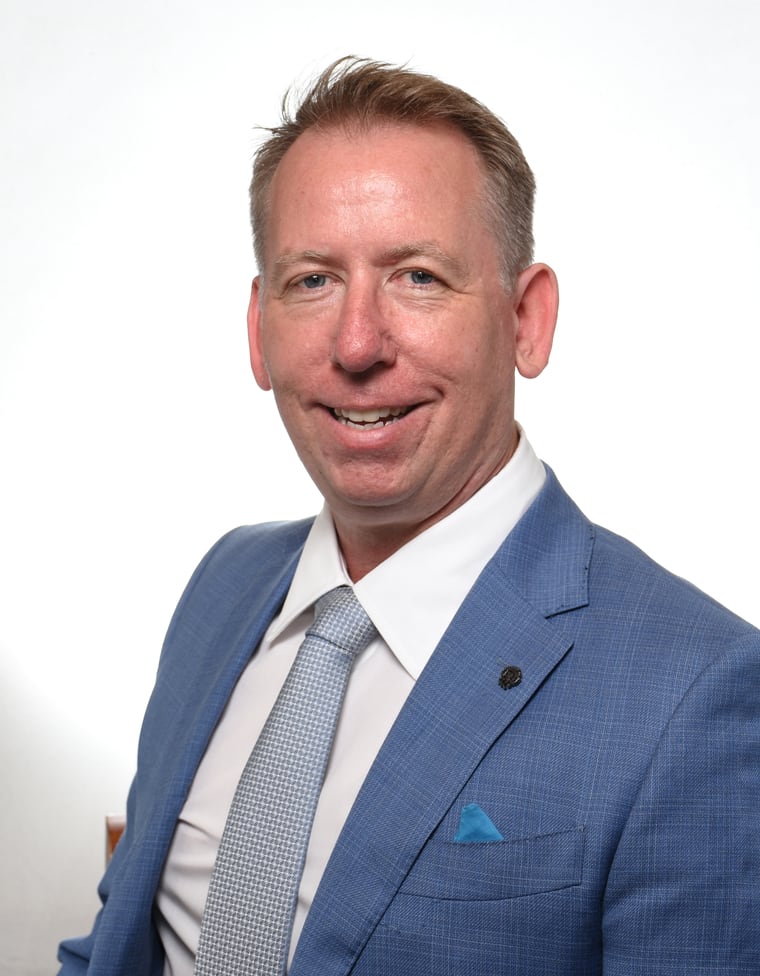
John Margerison is the Founder & CEO of XFactorAI, an international entrepreneur focused on building trust-first, human-in-the-loop AI systems for business. More at johnmargerison.com.
Put this to work in your business.
GIDEON does the research, finds the money, and produces the work. Your first month is on us.
Start free